
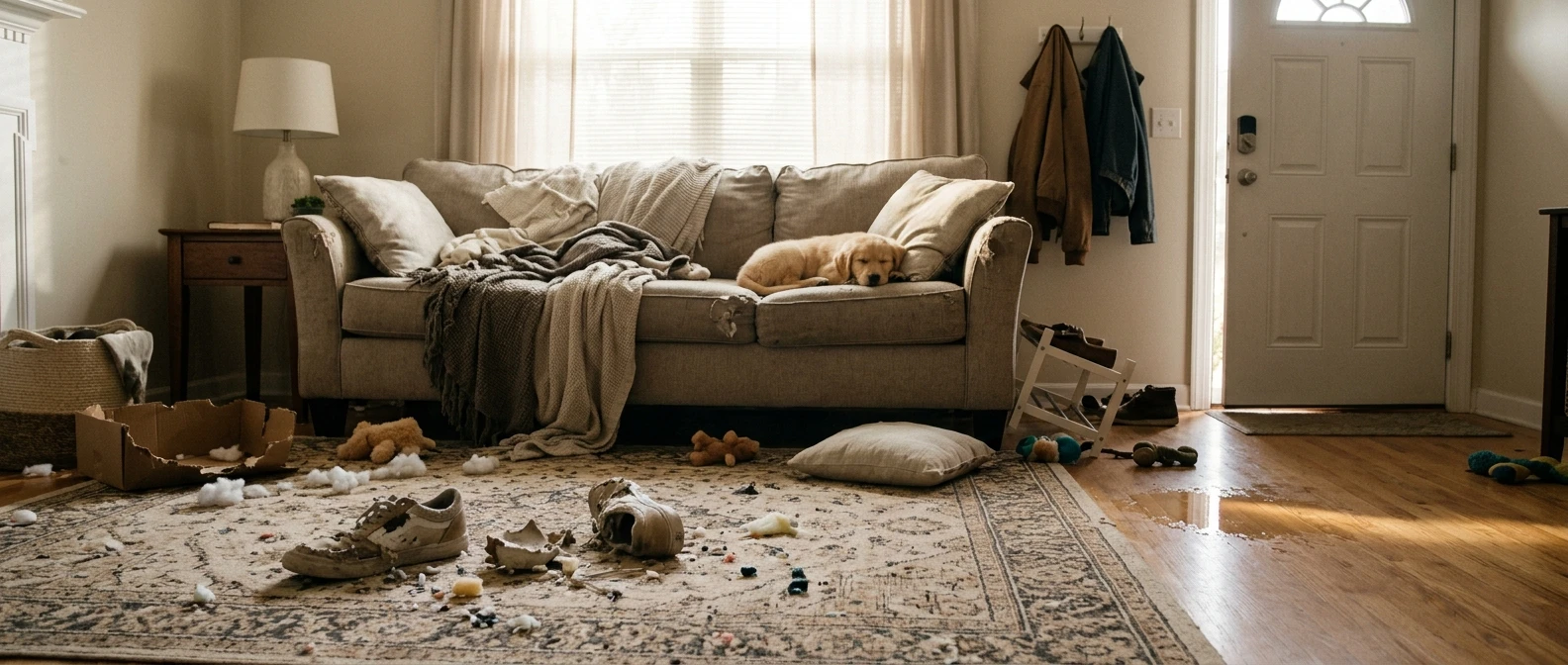
Your shoe is in three pieces, there is a puddle by the door, and the puppy who caused both is asleep on the sofa looking innocent. If that is your living room right now, you are in good company. Nearly every first-time owner has a week or two where the house seems to belong to someone with four legs and no rules.
This site is built for that moment. It is a home for online puppy training classes for first time owners, and it starts from a simple idea: what you do every day matters more than any single trick.
What a well-behaved companion actually looks like day to day
A good dog is not a dog that performs on command for visitors. It is a dog you can live with without constant management.
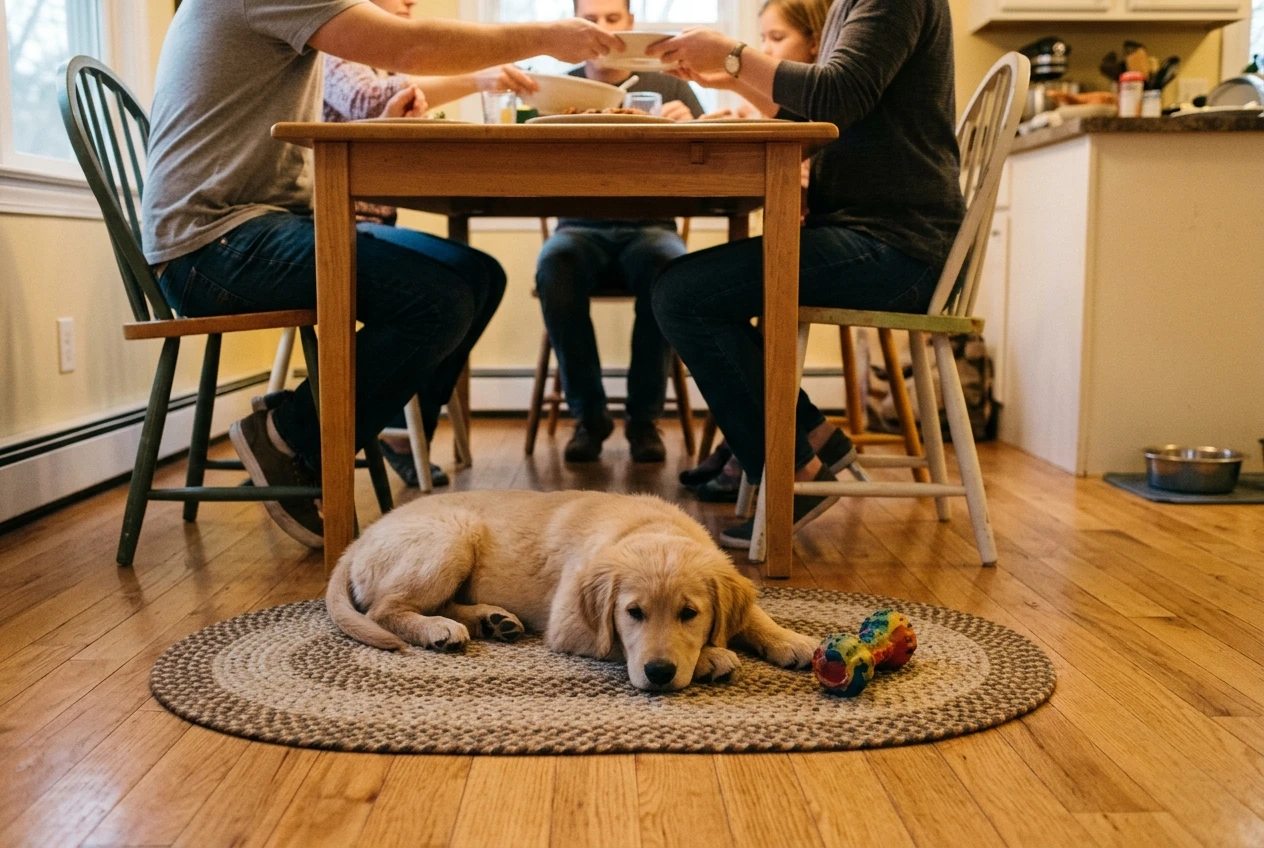
In practice that looks like a puppy who waits at the door instead of bolting through it, settles on a mat while you eat dinner, and walks beside you without hauling your arm out of its socket. It comes back when called, mostly, and chews its own toys because it has learned which things are its own.
None of that needs a special talent in the dog. It comes from the same few behaviors being taught the same way, over and over, until they become habit.
Why puppies stay unruly: it’s rarely the dog, it’s the follow-through
Puppies chew, nip, jump and make messes because they are young and curious, and nobody has yet shown them what to do instead. Teething makes chewing worse. Boundless energy makes everything else worse. All of this is normal.
What keeps the chaos going is usually inconsistency. Jumping up gets a cuddle on Monday and a scolding on Tuesday. One family member says “down” and another says “off.” A command gets repeated five times before anyone enforces it, so the puppy learns that the first four don’t count.
A puppy reads patterns, not intentions. If the pattern is unclear, the behavior stays unclear. That is good news, because the pattern is the part you control.
How the method works: small daily habits you can actually keep up
The follow-through-first method puts your consistency ahead of fancy training. You pick one behavior, decide on one cue word, and reward it the same way every time. Then you do it again tomorrow.
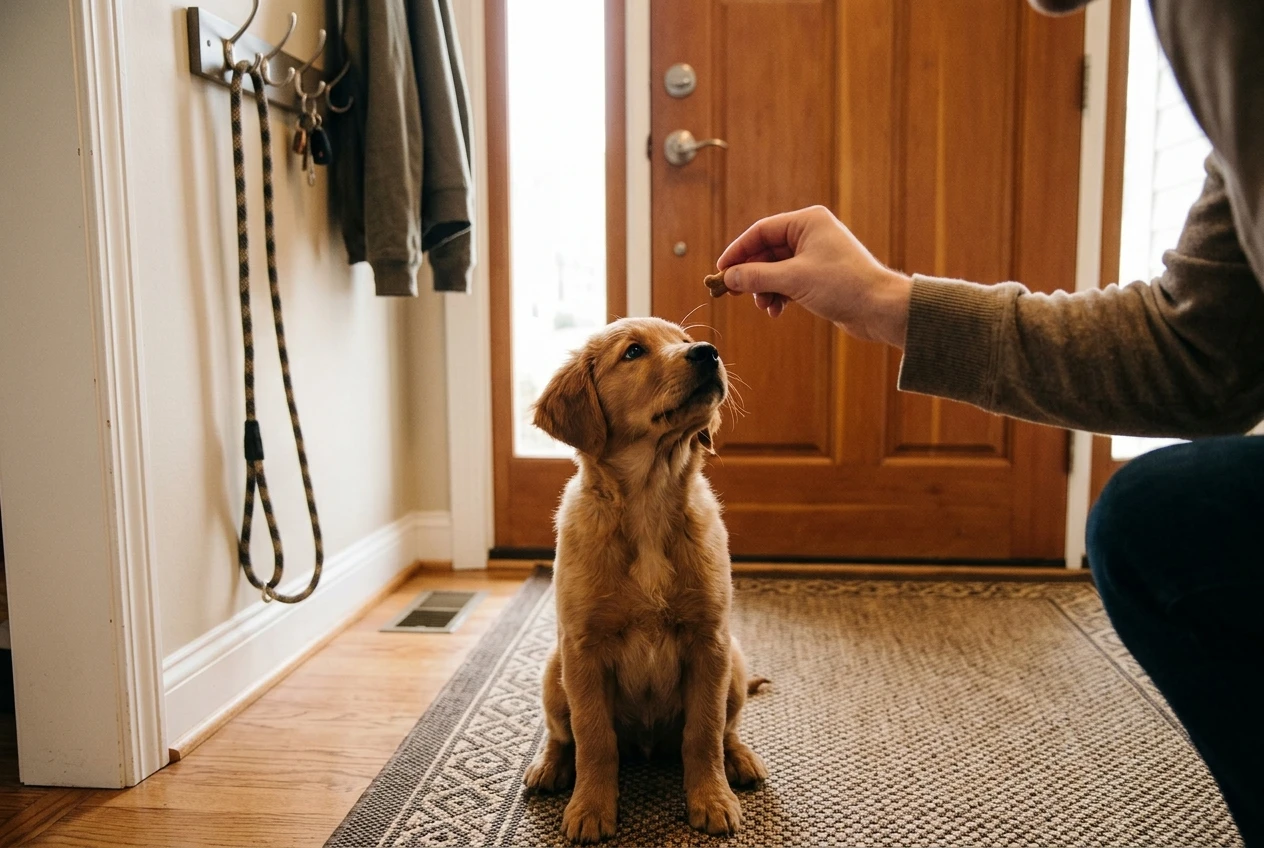
A few habits carry most of the weight:
- Short sessions. Five minutes of focused practice, a few times a day, beats one long session that leaves you both frustrated.
- One cue, one meaning. Everyone in the household uses the same word for the same action.
- Reward right away. A treat or praise delivered within a second or two tells the puppy exactly which behavior earned it.
- Practice in daily life. Ask for a sit before meals, before the leash goes on, and before the door opens. Training then fits into routines you already have.
- Finish what you ask. If you give a cue, you see it through, calmly, rather than letting it drift.
The last one is the heart of the method. It costs nothing and takes no equipment, only attention. You will not do it perfectly every day, and you don’t need to. You need to do it often enough that the pattern is clear.
Inside the online obedience classes: what you’ll do and what you get
The online dog obedience classes turn that approach into a sequence you can follow. The lessons are online, so you watch a lesson and then practice with your puppy in your own home, where the real habits have to form anyway.
You get an order to work in, which spares you from guessing what to teach next or hopping between random videos that contradict each other. Each lesson gives you something specific to practice, and the method keeps pointing you back to the daily follow-through that makes it stick.
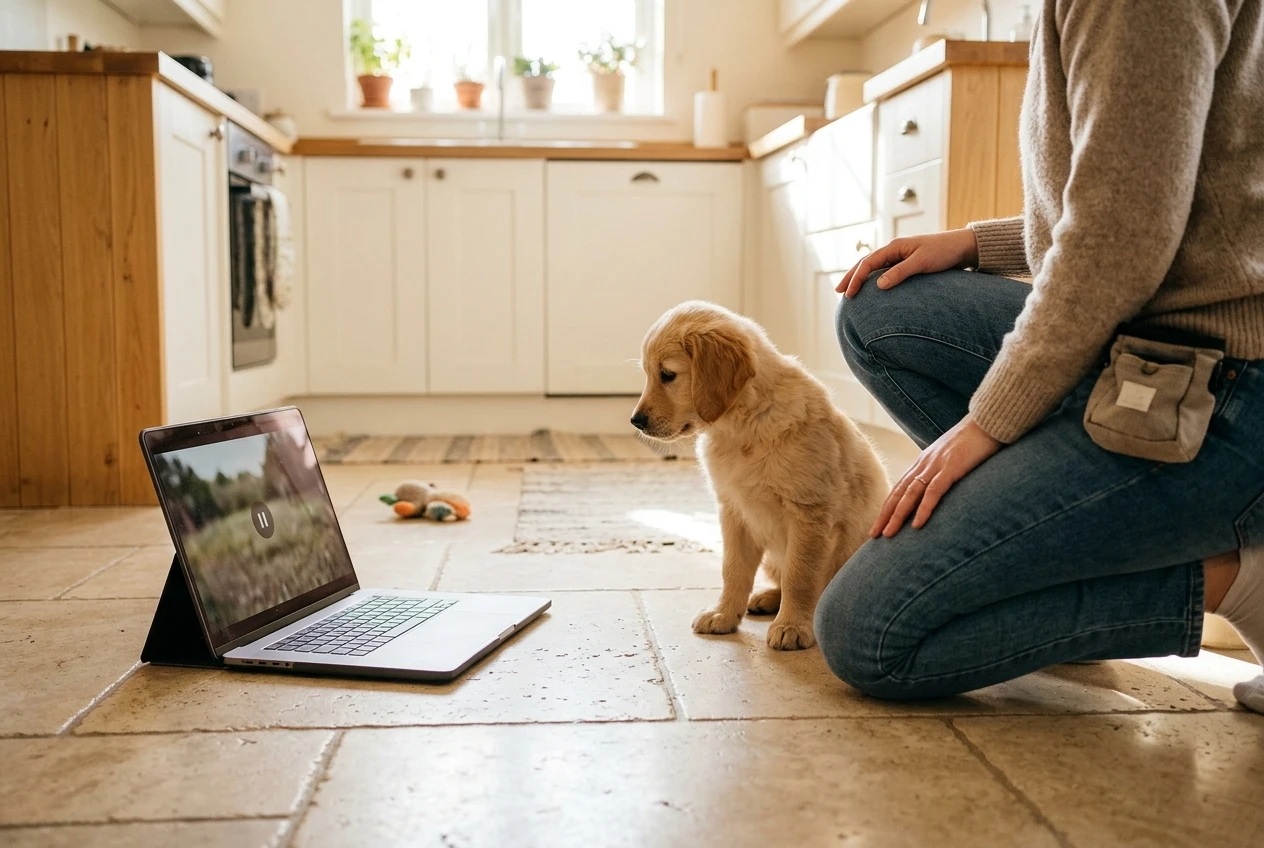
Learning at home also means your puppy practices where the problems happen: the hallway, the kitchen, the front door. You can pause a lesson, repeat it, or return to it on a day when the puppy was a handful. For a first-time owner, that flexibility matters more than it sounds, because progress with a puppy is rarely a straight line.
Start where you are: puppy basics to read first, including breed guides like the Chihuahua profile
You don’t have to be ready for a class today. If you are still working out what your puppy needs, read the basics first. Understanding why puppies behave the way they do makes every later lesson easier to apply.
Breed knowledge helps too, because size, energy and temperament change what daily life with a dog looks like. If you share your home with a small dog, the Chihuahua breed guide covers their origins, coat types, health quirks and what they are really like to live with. Knowing your dog’s tendencies helps you set realistic expectations and notice what is normal for the breed and what deserves attention.
Use that reading to shape your routine. A dog that is easily startled, or one that never seems to tire, will need a slightly different rhythm of practice, though the follow-through principle stays the same.
Pick your first step: join a class or start with the free puppy guides
There are two sensible places to begin. If you like to learn by reading and want to get your bearings, start with the free puppy guides and pick one habit to practice this week. If you would rather have a clear sequence to follow from the first day, a class gives you that structure.
Either way, the first step is small. Choose one behavior, one cue word, and a handful of five-minute sessions. A puppy who sits politely for dinner, and a household that responds the same way every time, is what turns a chewed-up living room into a calm one.
Your puppy is not running the house on purpose. It is waiting for a clear pattern to follow, and you can provide one. Join the online dog obedience classes and start your puppy’s first lesson this week.