
Hi, I’m Maureen and I am a lifelong dog owner. I’ve spent most of my adult life sharing a home with dogs. I have taken them through obedience, agility and water work. I am not a professional trainer and I hold no training certifications, and I’m saying so first because you are deciding whether to trust this site.
What I can offer is the view of someone who has lived with dogs, worked with them and thought hard about what makes the whole arrangement go well for both sides. If you want first time dog owner advice from a person who has been in your shoes as an owner, you are in the right place. If you want a veterinary opinion or a professional behaviorist’s diagnosis, your vet or a qualified professional is the right person to ask.
Where my life with dogs started
Dogs have been part of my adult life for most of it, and that is my whole qualification. It is a different thing from a certificate. It means I have lived with dogs through all the stages: the chaotic puppy months, the adolescent phase when a dog seems to forget everything it knew, the settled adult years and the slower years after that.
I’m not going to dress that up into a dramatic origin story. What matters for you is what it means for this site. Everything here comes from the perspective of an owner who has to live with the result of every decision, from the breed you pick to the habits you let slide in the first month. A trainer sees a dog for an hour a week. An owner sees the dog at 6 a.m., at 11 p.m., and every time the doorbell rings.
What obedience, agility and water work taught me
Each of these activities asks something different of a dog and of the person at the other end of the leash.
Obedience is the foundation. It covers sit, down, stay, walking politely beside you and coming when called. It rewards the owner who is clear about what a cue means and consistent about it. A dog that is told “sit” sometimes means it and sometimes doesn’t has learned that the word is optional.
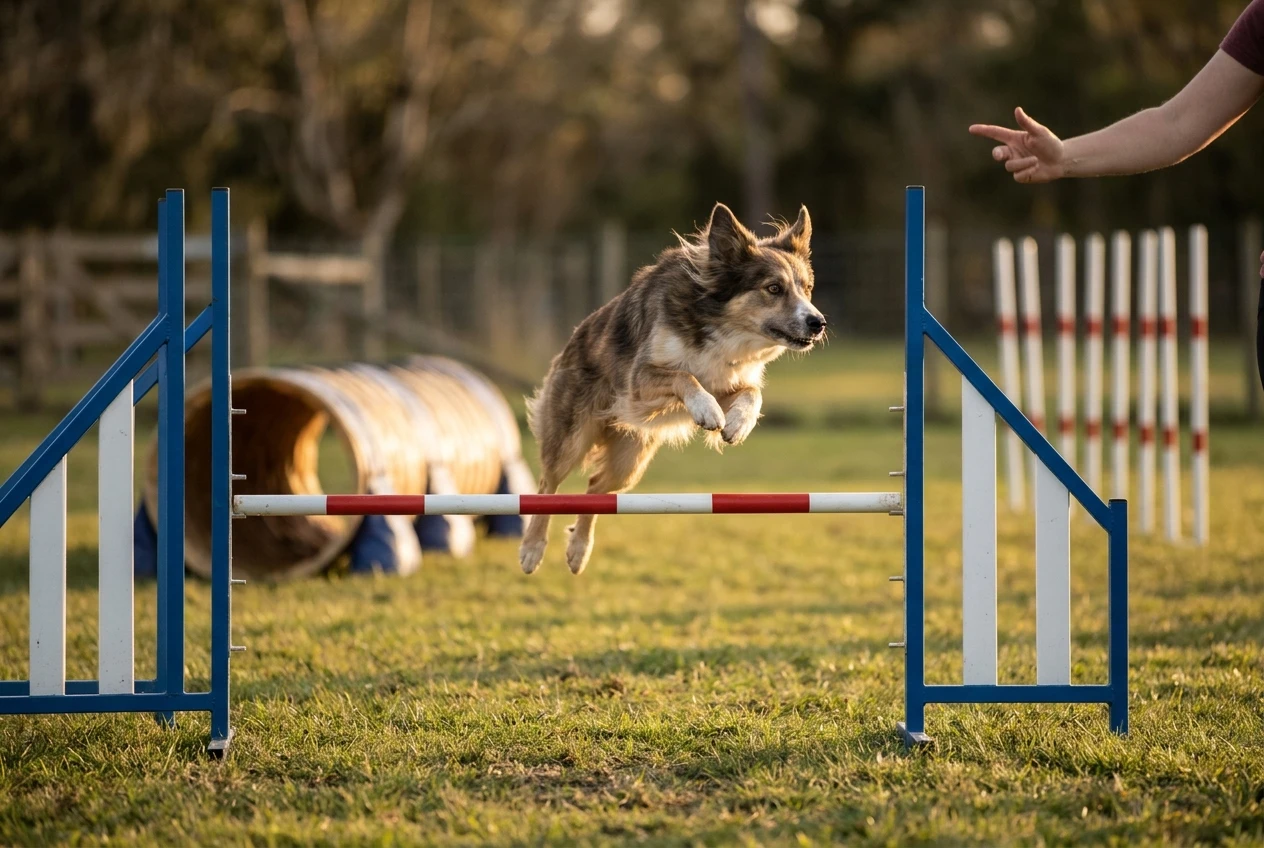
Agility sends a dog around a course of jumps, tunnels and weave poles while the handler directs with voice and body. It demands attention at speed. A dog can be excited and still be listening, but only if it has learned to check in with you, and agility makes it obvious when that has not happened yet.
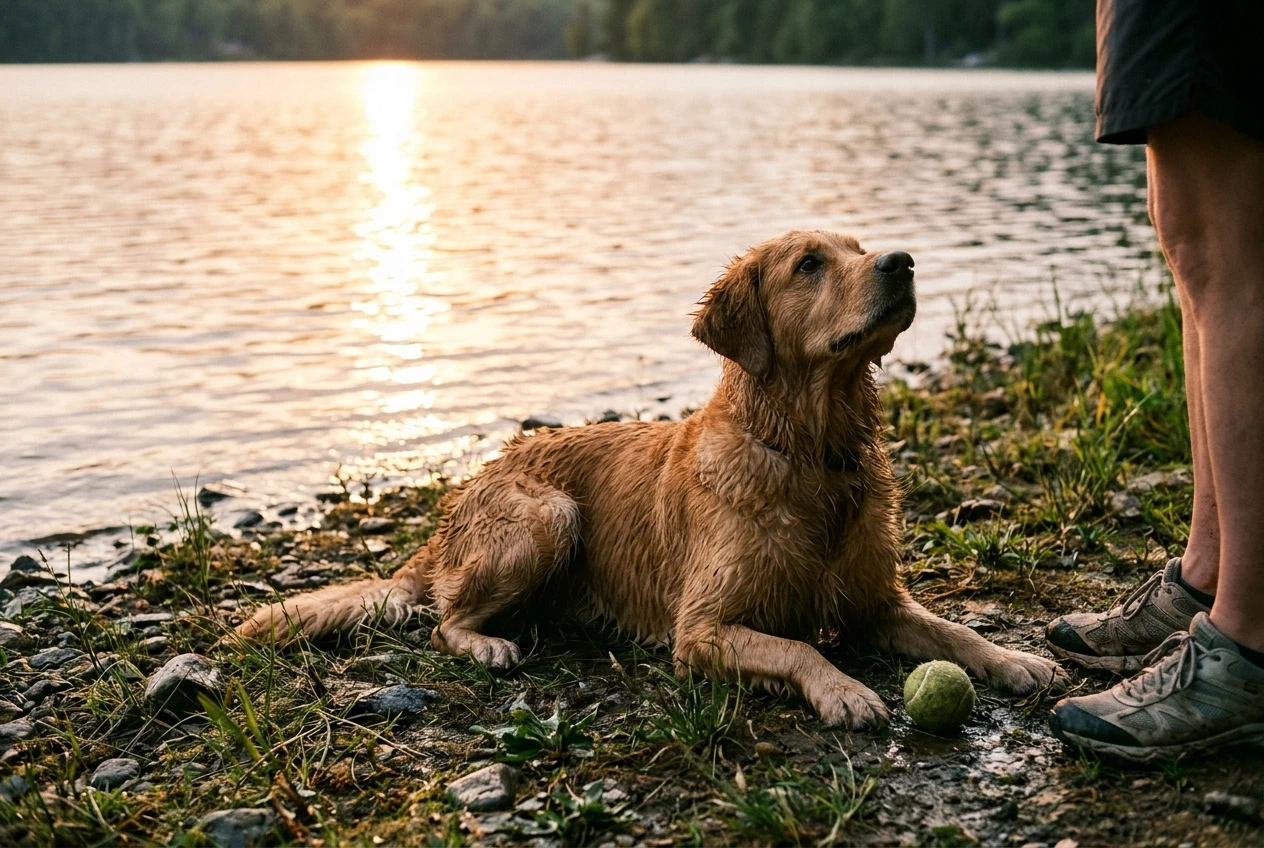
Water work builds confidence in a different setting. Swimming and retrieving in water ask a dog to trust you in a place that feels unfamiliar. It also calls for patience and care from the owner, because a dog should be introduced to water gradually and never pushed into it.
The common thread I take from all three is that dogs do well when their person is clear, consistent and paying attention. Most of what looks like a “bad dog” problem is a communication problem that began with the human.
Why an active body makes for a focused mind
I believe a physically active dog is a focused dog. A dog with a lot of unspent energy has trouble listening, because its body is asking for something else. Ask that dog to sit still and learn a new cue, and you are competing with its need to move.
A dog that has run, played, swum or worked through a course tends to be much easier to teach afterward. Exercise does not replace training. It makes training possible, because the dog can finally put its attention on you.
Activity does not have to mean agility equipment or a lake:
- Daily walks with time to sniff and explore
- Fetch or tug games with clear rules about when they start and stop
- Swimming, where the dog is suited to it and conditions are safe
- Short training sessions that make the dog think as well as move
How much exercise is right depends on the breed, the age of the dog and its health. Puppies and older dogs have different limits, and some breeds have physical issues that affect what they should do. Check with your vet about what suits your dog.
Why I started this site: breeds, health and the lifetime commitment
This site covers the decisions that come before the puppy and the work that comes after it. The first of those decisions is whether you should get a dog at all.
Many people get a dog because they love the idea of one. The idea does not need walking in the rain, does not chew the sofa and does not need care when you want to travel. A real dog does all of those things, and many dogs live for a decade or more. So before you look at puppies, ask yourself some plain questions:
- Why do I want a dog, and would I still want one on the days that are inconvenient?
- Do I have the time every day for exercise, training and company?
- Can I cover food, routine vet care and unexpected bills over the whole life of the dog?
- Who looks after the dog if I travel, change jobs or move house?
- Is everyone in my home ready for it?
If the honest answers are uncertain, waiting is a good decision, and I would rather you wait than rehome a dog you were not ready for. If the answers are yes, the next question is which dog suits your life. Breeds differ a great deal in energy, size, temperament and how much they want to be near you. My piece on what is the best dog breed for me is a good place to begin, and the breed profiles on the site, such as the one on the Doberman, the “Velcro dog”, show how much a single breed’s nature can shape daily life.
Breed also comes with health patterns. Some breeds are more prone to particular problems, and it is worth knowing that before you choose one. I share what owners should be aware of and what questions to bring to a breeder or a vet. I do not diagnose or treat, and no article here replaces a conversation with your vet.
Who this site is really for
This site is for people at the start of the journey. Some of you are still deciding whether a dog fits your life. Some of you have picked a breed and are waiting on a litter. Some of you brought a puppy home last week and are wondering why it has not read the manual.
It is also for people who want to do the job properly and follow through. Raising a well-behaved dog takes repeated, ordinary effort over months: the same cue, the same rule, the same calm response, day after day. Nothing on this site offers a shortcut around that. What I can do is explain the work clearly, so you know what you are doing and why.
If you already own an experienced dog and have been through puppyhood a few times, you may find less that is new here. You are welcome to read along, and I would be glad to hear what has worked for you.
Say hello and see what’s inside
Browse the articles on breeds, health, the commitment of dog ownership and puppy basics, and take what is useful. If something does not match your experience, or you have a question about your own situation, get in touch. I would rather hear from you than have you guess.
When you are ready to put the training into practice, look through the online dog obedience classes and enroll in the one that fits where you and your puppy are right now. A class for a brand-new puppy is not the same as one for a dog that already knows the basics, so pick the stage you are actually at, not the one you hope to reach.