
You bring home a puppy, and within a week you have heard two opposite things. One person says to show the dog who’s boss. Another says to reward what you like and ignore the rest. Both promise a well-behaved dog, and both sound sure of themselves.
This article compares positive reinforcement vs dominance training in the moments when you need an answer: the leash goes tight, the puppy launches at a visitor, or your dog hears you and keeps going. I’m a lifelong dog owner, not a certified trainer, so this is an owner’s view of what each approach asks you to do and what your dog is likely to take from it.
Why every new owner hears two completely different kinds of advice
Advice comes from everywhere: relatives, neighbors, TV shows, forums, the person at the pet store. Much of it was passed down from people who raised dogs a generation or two ago, when firm correction was the standard answer. Newer advice comes from people who have seen reward-based methods work and talk about them online.
The two camps also sound different. Dominance advice is short and confident: “Don’t let him walk through the door first.” Reward-based advice sounds slower and more complicated, and to a tired new owner it can seem soft. That difference in tone pushes many people toward the firm option before they have compared what each one actually does.
So it helps to look at what you would do, day to day, under each approach.
What dominance training asks of you, and what your dog learns from it
The dominance approach rests on the idea that your dog is trying to rise in rank and you must stay above it. In practice that usually means:
- Correcting unwanted behavior at the moment it happens, often with a leash snap, a loud “no” or physical pressure.
- Following status rules such as eating before the dog, going through doors first, and not letting the dog on furniture.
- Staring down or physically pinning a dog to show control.
The first problem is that a young puppy has no way to know a leash snap means “I am the leader.” What the puppy can connect is that something unpleasant happened while you were nearby. Over time, many dogs learn to watch you warily, or they behave well only while you are visibly watching.
The second problem is that correction tells a dog what to stop and nothing about what to do instead. A puppy that gets pushed off a guest still doesn’t know where its feet are supposed to go. You end up correcting the same thing again and again, which is tiring for you and confusing for the dog.
What positive reinforcement really means beyond handing out treats
Positive reinforcement means that when your dog does something you like, something good happens right away, so the dog is more likely to do it again. Food is the usual reward because it is quick and easy to deliver. But a game of tug, a thrown ball, a scratch behind the ears, a door opening for a walk, or being let off the leash to sniff can all work, depending on the dog.
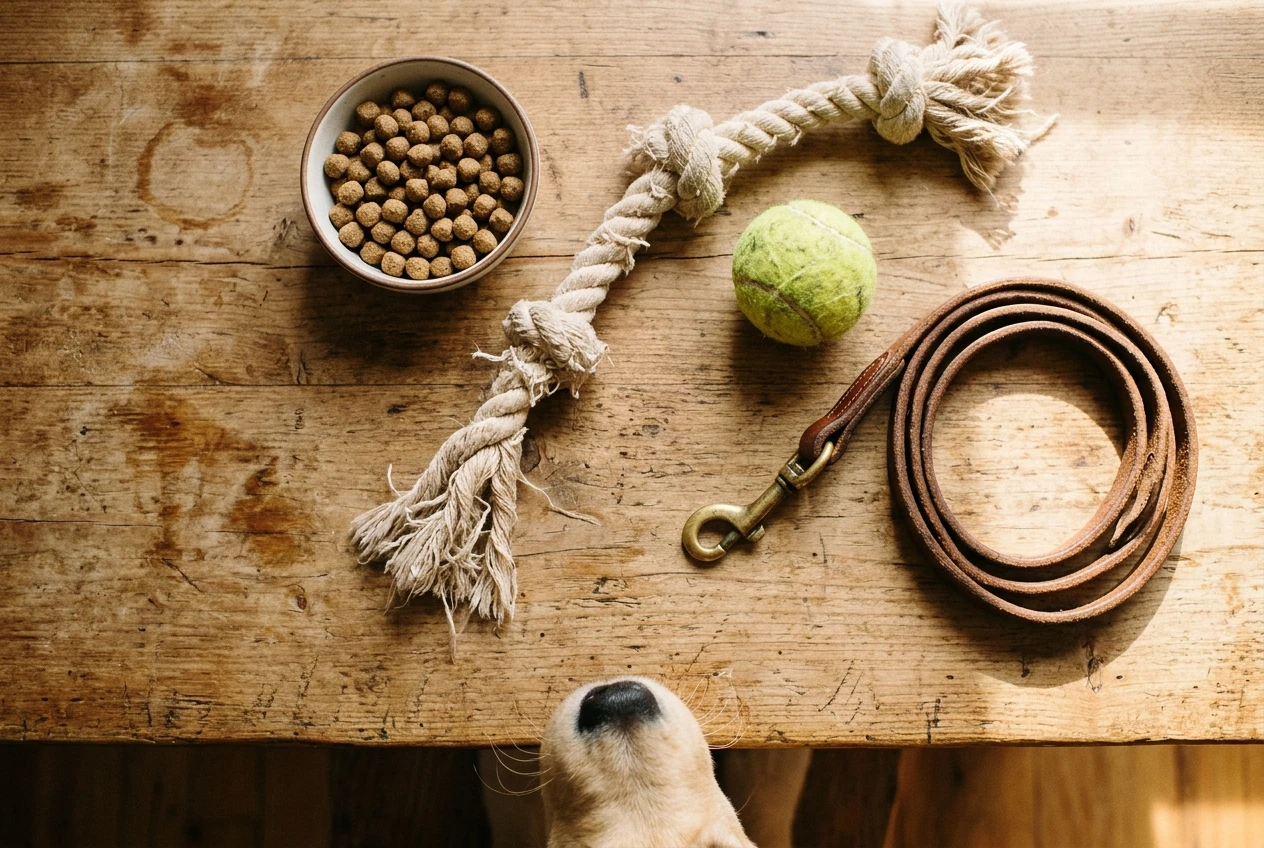
It also doesn’t mean you let the puppy do whatever it wants. Reward-based training still has rules, and you still say no to things. The difference is that most of your effort goes into showing the dog what you want and making that choice pay off. The rest goes into managing the environment so the puppy can’t practice mistakes, such as a gate across the kitchen door or the leash on indoors while you can’t watch.
Treats are not bribes, either, as long as you use them the right way. At first you may hold a treat to guide a sit. Soon the treat appears after the sit, as payment, and then only some of the time. A dog that only responds when it sees food in your hand has usually been taught with the food showing from the start and never faded out.
The same three problems handled both ways
Leash pulling
Dominance approach: The dog pulls, you snap the leash back and say “no” or “heel.” The dog stops for a second, then pulls again. What it learns is that pulling sometimes gets a jerk on the neck and mostly gets it where it wants to go, so pulling still works.
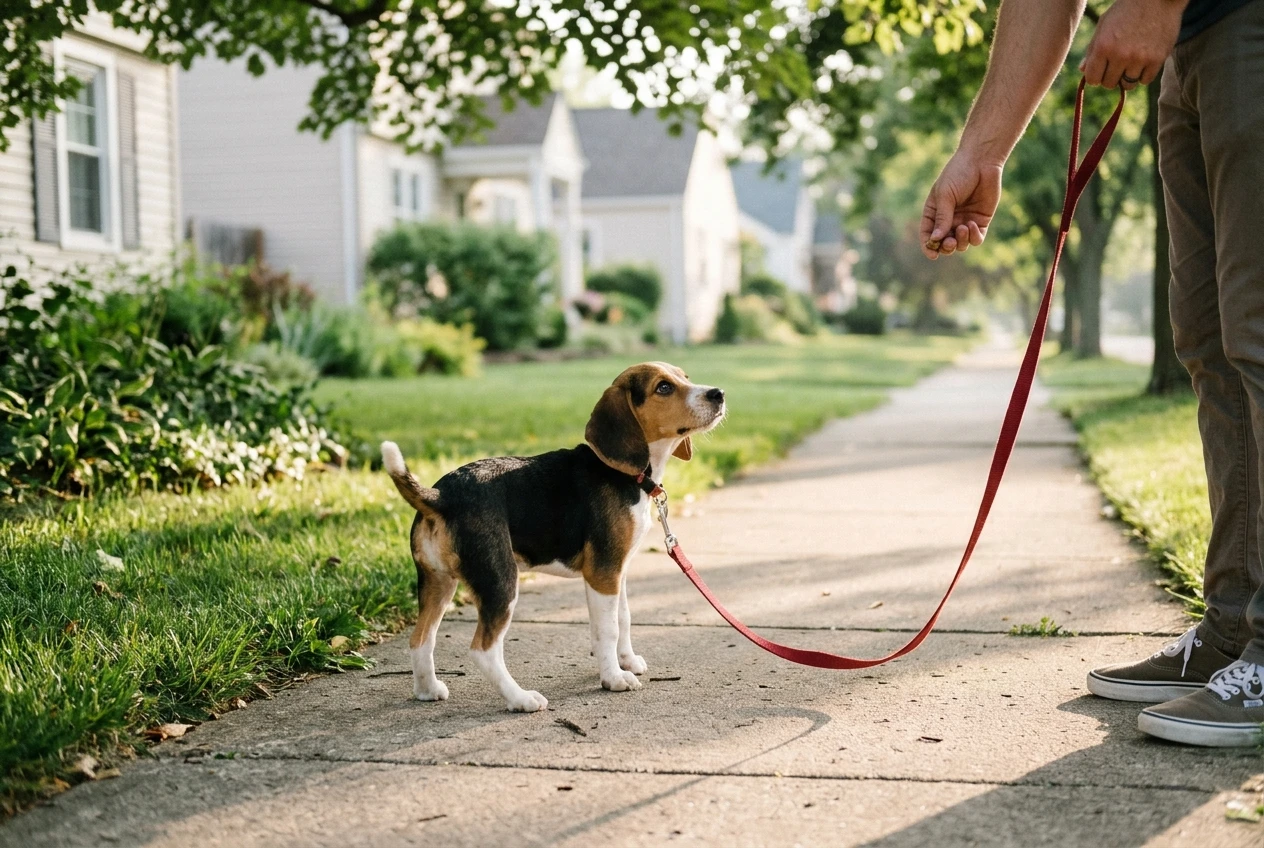
Reward-based approach: The moment the leash goes tight, you stop walking. When the dog turns back or the leash loosens, you reward at your side and start moving again. Some owners also change direction every time the dog pulls ahead. The dog learns that a slack leash is what makes the walk continue. It is slow at first, and you will not cover much ground for the first week or two, but the lesson is clear and the dog can repeat it on every walk.
Jumping
Dominance approach: The puppy jumps up and you knee it, step on its back toes or push it off. For a dog that wants attention, being pushed is still attention: it was touched, it was noticed, something happened. Many puppies read this as a rougher version of the game they started, and they jump again.
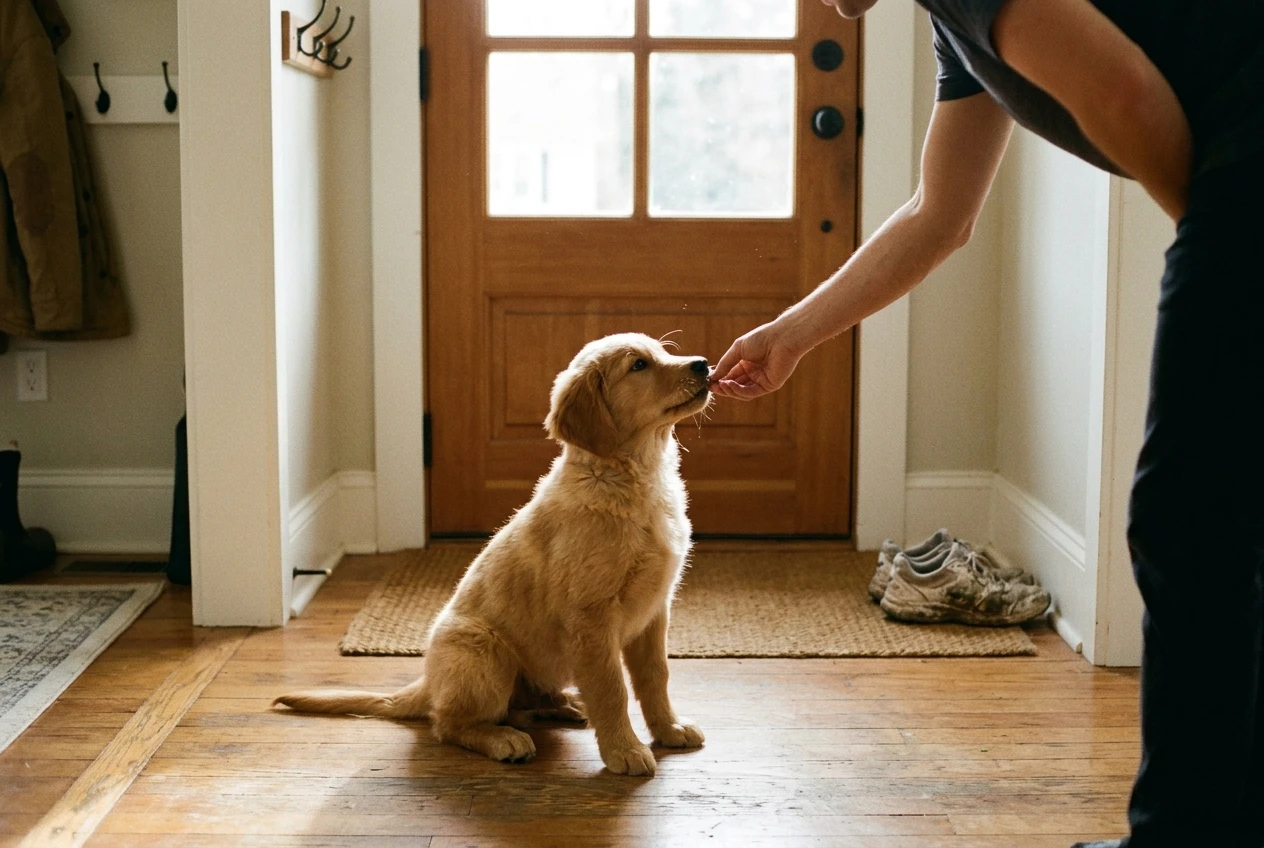
Reward-based approach: You turn away, keep your hands to yourself and give no eye contact until all four paws are on the floor. The instant they land, you give calm attention or a treat. The puppy learns that jumping ends the fun and sitting or standing brings it back. Visitors need the same instructions, which is the hard part. I go through the full routine in my piece on how to stop your puppy from jumping up.
Ignoring you when you call
Dominance approach: The dog doesn’t come, so you chase it, shout, and scold it when you finally catch it. From the dog’s side, coming to you led to being told off. Next time it has even less reason to come, and it may start staying just out of reach.
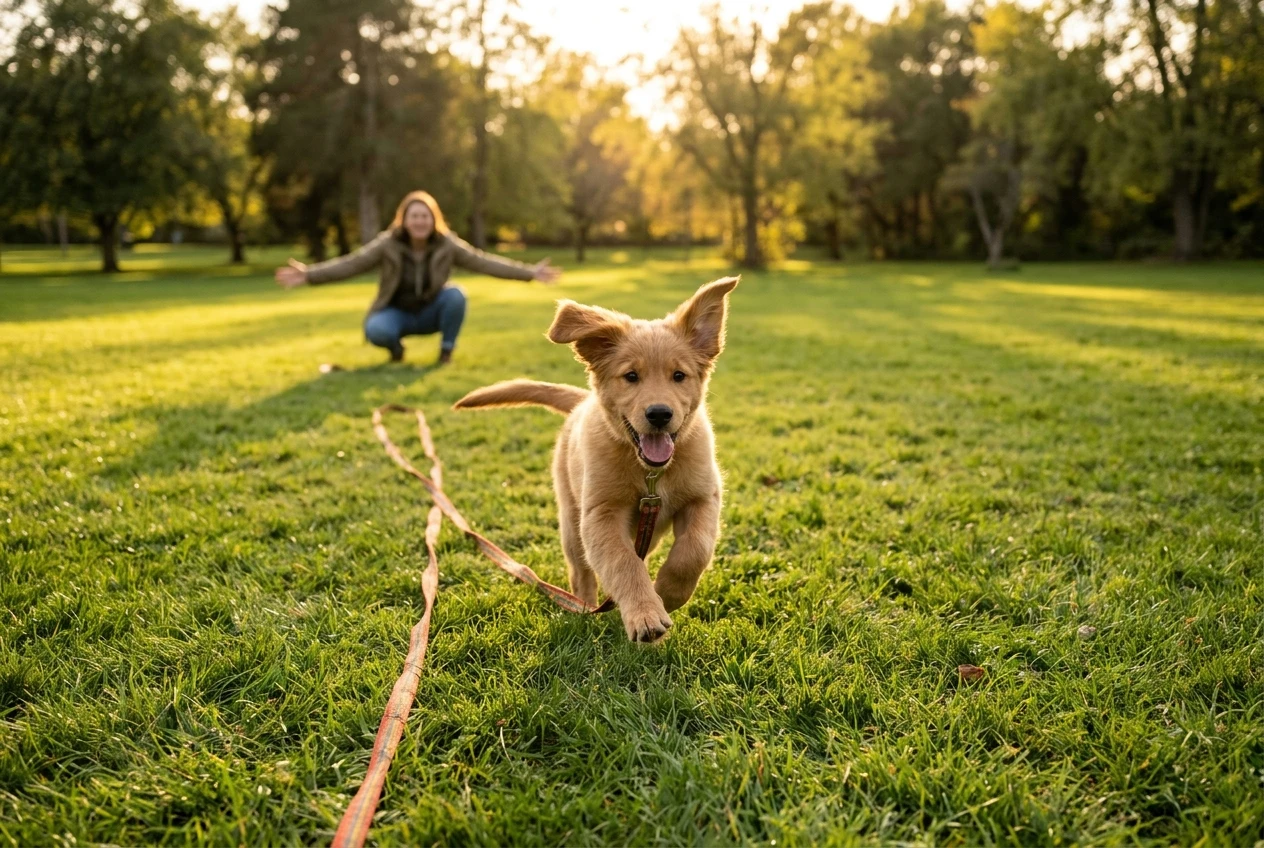
Reward-based approach: Coming to you is always the best thing that can happen. You call in a cheerful voice, reward generously every time (use the best treats you have), and never call the dog to end something fun and then do something it dislikes, such as a bath or leaving the park. At first you practice indoors or on a long line, where the dog can’t run off and fail. When the dog comes, it should be glad it did.
Why rewarding the right thing builds trust and a dog who wants to work with you
A dog trained mostly with correction learns to avoid making mistakes. A dog trained mostly with rewards learns to look for ways to earn something. That second dog checks in with you on a walk, glances up when you speak, and tries behaviors on its own to see what pays off. You can see it in a dog’s body: loose and curious instead of stiff or cautious.
Trust builds because the dog can predict you. It knows what makes good things happen, and it knows you will not surprise it with something unpleasant for doing a normal dog thing. That predictability is what makes a dog easy to live with, and it matters especially when you bring the dog into new places, such as the vet’s waiting room, a friend’s house or a busy sidewalk.
The part that decides whether any of this works is follow-through. Rewarding the right thing once means nothing. Rewarding it every day, from every person in the house, for months, is what makes the habit stick. That is a lot more about the owner than about the dog, which is why I think it is the real work of raising a puppy.
How to start today with a puppy: timing, small rewards and staying consistent
You don’t need special equipment to begin. You need a handful of small treats and a few minutes. Three things matter most.
Timing. Reward within a second or two of the behavior. A puppy lives in the moment, and a treat that arrives five seconds late may be paying for the wrong thing, like getting up from the sit. Some owners use a short marker word such as “yes” the instant the dog does the right thing, then give the treat.
Small rewards. Cut treats into pieces about the size of a pea, or smaller for a tiny breed. You want to do many repetitions in a short session without the dog getting full or slowing down. Save your best treats, such as cooked chicken or cheese, for the hard jobs like recall around distractions. If you have questions about how many treats are healthy for your puppy, ask your vet.
Consistency. Decide the rules before the puppy breaks them. If jumping is not allowed, it is not allowed when you come home tired or when a guest says they don’t mind. Make sure everyone in the house uses the same cue words and the same rules. Keep sessions to five minutes or so, a few times a day, and end while the puppy is still succeeding.
For a starting list of what to teach, I wrote up the basic commands to begin with on day one. Sit, down, come and the rest are all easy to teach with rewards, and each gives you a way to redirect the puppy when it is doing something you don’t want.
Where a leader’s role still matters, and how this differs from my pack leader piece
Rejecting dominance training does not mean rejecting leadership. A puppy needs someone who sets limits, controls access to the good things (food, walks, play, the couch) and makes the decisions, because the puppy can’t make good ones yet. A dog with no structure tends to be anxious and hard to live with.
The difference is in how you lead. You can lead by being clear, calm and dependable, and by making the right choice rewarding. You don’t need to lead by intimidation or by winning status contests. If you want the leadership side of this, my article on how to establish yourself as pack leader covers it. This piece works from a different starting point: instead of asking where you rank, it asks what you do in the next ten seconds when the puppy does something wrong, and what the dog learns from it.
If your dog shows real aggression, such as growling over food, snapping or biting, don’t try to handle it alone with either method. Talk to your vet first, since pain and illness can cause behavior changes, and then to a qualified behaviorist who can watch your dog in person.
If you want help turning this into daily habits you actually follow through on, take a look at the online dog obedience classes, which walk you through reward-based training step by step with your own puppy.
